Funfair: A Bold New World of Typography
Typography is more than just letters on a page—it’s a visual language that shapes how we perceive information, emotion, and identity. Among the many typefaces that have emerged in recent years, Funfair stands out as a unique blend of whimsy and professionalism. Designed for those who want to make a statement without sacrificing clarity, Funfair offers two distinct yet complementary fonts: a quirky regular style and a bold, eye-catching caps variant. Together, they form a duo that feels both playful and powerful.
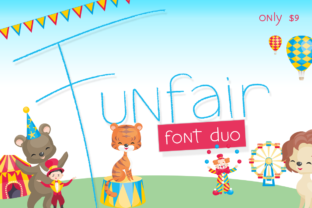
The regular version of Funfair features a slightly irregular, hand-drawn aesthetic that evokes the charm of a child’s doodle or a carnival sign. Its lowercase letters are soft and flowing, with subtle variations in stroke width that give it a sense of movement. This font is ideal for projects that aim to convey creativity, fun, or a lighthearted tone. However, its readability remains strong, making it suitable for body text in digital and print formats alike.
Complementing the regular style is Funfair Caps, a bold, uppercase-only variant that adds a layer of drama and energy. The caps are large, exaggerated, and almost cartoonish—like the oversized lettering you might see on a clown’s shoes or a neon sign at a roadside diner. This font works best when used sparingly, such as for headings, logos, or emphasis. When paired with the regular style, it creates a striking contrast that captures attention while maintaining a cohesive visual identity.
One of the most appealing aspects of the Funfair duo is how well the two styles work together. The regular font’s textured, lowercase letters provide a grounding element, while the caps add a touch of flair that can elevate any design. This balance makes Funfair particularly effective for branding, marketing materials, and creative projects that require both personality and professionalism.
Consider a scenario where a small business owner wants to launch a new product line. They could use the regular Funfair font for product descriptions, ensuring that the text remains easy to read while still feeling engaging. Meanwhile, the caps variant could be used for the product name or tagline, drawing the eye and reinforcing the brand’s identity. The result is a design that feels both approachable and polished—a rare combination in today’s saturated market.
Another use case for Funfair is in editorial content, such as magazine articles or blog posts that aim to stand out from the crowd. The regular font can be used for body paragraphs, offering a refreshing alternative to standard sans-serif or serif typefaces. The caps variant, when used for subheadings or pull quotes, can add visual interest and help break up dense blocks of text. This dynamic interplay between the two styles keeps readers engaged and makes the content more memorable.
For educators and students, Funfair can be a valuable tool in teaching typography and design principles. Its unique characteristics provide an excellent opportunity to discuss how different typefaces influence perception and communication. By experimenting with the regular and caps variants, learners can explore the relationship between form and function, and how even the smallest details can impact the overall message.
Business owners and marketers will find that Funfair’s versatility makes it a useful addition to their design toolkit. Whether creating social media graphics, email newsletters, or website copy, the font’s playful yet professional nature allows for a wide range of applications. It’s especially effective for brands targeting younger audiences or those looking to differentiate themselves in a competitive space.
It’s also worth noting that Funfair’s design philosophy aligns with current trends in typography. As more designers seek to move away from rigid, uniform typefaces, there’s a growing appreciation for fonts that embrace imperfection and individuality. Funfair fits perfectly into this movement, offering a fresh alternative that feels both modern and nostalgic.
When considering typography choices, it’s important to think about the context in which the font will be used. While Funfair is undeniably eye-catching, it may not be the best fit for every project. For instance, in formal or high-stakes environments, a more traditional typeface might be preferable. However, for creative, expressive, or informal settings, Funfair can be a game-changer.
Ultimately, the success of any typeface depends on how well it serves its purpose. Funfair excels in situations where visual impact and personality are valued alongside readability and functionality. Its ability to blend the whimsical with the practical makes it a standout choice for a wide range of users, from hobbyists to professionals.
As the design landscape continues to evolve, fonts like Funfair remind us that typography is not just about conveying information—it’s about creating an experience. With its bold caps and playful lowercase, Funfair invites us to think differently about how we communicate, and to embrace the joy of visual expression.
Whether you’re designing a logo, writing a blog post, or simply looking for a way to make your text stand out, the Funfair duo offers a compelling solution. Its unique character and thoughtful design make it more than just a typeface—it’s a statement, a tool, and a source of inspiration.