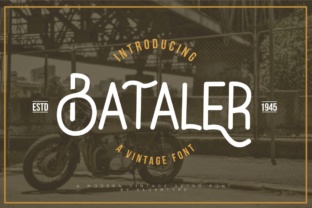
Bataler: A Vintage Retro Font for Elegant Design
Bataler is a vintage retro font that offers a unique blend of elegance and professionalism. Its design evokes a sense of nostalgia, making it ideal for projects that require a touch of sophistication and charm. While it may not be the most versatile font for body text, Bataler shines as a display or headline font, particularly in contexts where a throwback aesthetic is desired.
The font’s distinct characteristics include its fluid script style, which mimics handwritten calligraphy with a refined edge. This makes it stand out from more rigid or modern typefaces. Bataler’s letterforms are slightly irregular, giving it a humanized feel that can add personality to designs without appearing too casual.
For designers looking to create visual identities, branding materials, or editorial layouts, Bataler provides a strong option when used appropriately. It works best in scenarios where the text is short and impactful, such as logos, headlines, or title cards. However, its readability at smaller sizes may limit its use in extended passages of text.
What Makes Bataler Unique?
Bataler distinguishes itself through its retro-inspired design, which draws from historical script fonts while maintaining a contemporary appeal. Unlike many modern sans-serif or serif fonts, Bataler incorporates subtle flourishes and variations in stroke weight that give it a handcrafted appearance. This quality makes it especially appealing for projects that aim to evoke a bygone era or emphasize artisanal craftsmanship.
One of the key features of Bataler is its versatility in different design contexts. While it is primarily a display font, it can also be used in combination with other typefaces to create balanced and visually engaging layouts. For example, pairing Bataler with a clean sans-serif like Helvetica or Arial can provide contrast and clarity, ensuring the overall design remains legible and professional.
Another aspect that sets Bataler apart is its ability to convey emotion and character. The font’s flowing lines and soft curves can communicate warmth, creativity, or timelessness, depending on how it is applied. This makes it a valuable tool for designers who want to express a specific mood or narrative through typography.
Comparing Bataler with Similar Fonts
When evaluating Bataler against similar fonts, it’s important to consider the intended use and design goals. Fonts like Brush Script, Lucida Calligraphy, or Garamond offer comparable styles but differ in their level of formality, readability, and application scope.
Brush Script, for instance, is a popular choice for informal or artistic projects due to its loose, brush-like strokes. While it shares some similarities with Bataler, it tends to be more casual and less structured. In contrast, Bataler maintains a more polished appearance, making it better suited for professional or high-end design work.
Garamond, a classic serif font, provides a timeless and elegant look that is highly readable in both print and digital formats. However, it lacks the hand-drawn quality of Bataler, which can be a drawback for designers seeking a more personalized or vintage feel. Bataler, on the other hand, offers a balance between traditional typography and modern aesthetics.
Other alternatives, such as Script MT Bold or French Script, also have their own strengths and limitations. These fonts often prioritize legibility over stylistic flair, which can make them more practical for certain applications. Bataler, by comparison, is best used in situations where visual impact and character take precedence over strict functionality.
Strengths and Limitations of Bataler
Bataler’s primary strength lies in its ability to add visual interest and historical flair to a design. It is particularly effective in branding, packaging, or marketing materials that aim to convey authenticity or a connection to the past. Its unique style can help a project stand out in a competitive market, especially when used creatively.
However, Bataler is not without its limitations. Its complexity and variation in letterforms can reduce readability, especially in smaller sizes or when used extensively. This means that it is generally not recommended for long paragraphs of text or body copy. Designers should also be mindful of how the font interacts with other elements in a layout, as improper use can lead to a cluttered or unprofessional appearance.
Another consideration is the availability of Bataler in different weights and styles. Some fonts offer multiple variations, such as bold, italic, or condensed versions, which can expand their usability. Bataler may have fewer options, which could restrict its flexibility in certain design scenarios. Users should check the available features before incorporating it into a project.
When Bataler Is the Right Choice
Bataler is an excellent choice for projects that benefit from a vintage or nostalgic aesthetic. It works well in logo design, especially for businesses or brands that want to emphasize tradition, craftsmanship, or a personal touch. For example, a boutique coffee shop or a handmade goods retailer might use Bataler to create a welcoming and authentic visual identity.
It is also suitable for editorial design, such as magazine covers, book titles, or event invitations. In these contexts, Bataler can enhance the overall tone and atmosphere of the design, adding a layer of sophistication that aligns with the content’s theme.
Additionally, Bataler can be a strong option for creative campaigns or artistic projects that seek to evoke a specific era or cultural reference. Its distinctive style allows for greater expression and can help differentiate a design from more conventional typefaces.
When to Consider Alternatives
While Bataler has its advantages, there are situations where other fonts may be more appropriate. For instance, if the goal is to create a clean, modern, or highly readable design, a sans-serif or minimalist font might be a better fit. Fonts like Montserrat, Roboto, or Lato offer clarity and versatility across various mediums, making them ideal for digital interfaces, websites, or corporate communications.
In cases where a more formal or structured appearance is required, serif fonts like Times New Roman, Georgia, or Cinzel may be preferable. These fonts are often associated with professionalism and authority, which can be essential for academic, legal, or business-related materials.
Designers should also consider the target audience when selecting a font. If the audience is primarily young or tech-savvy, a more contemporary font may resonate better than a vintage-style one. Conversely, if the audience values tradition or heritage, Bataler could be a compelling choice.
Practical Applications and Examples
One practical application of Bataler is in the creation of vintage-style posters or advertisements. For example, a film festival promoting classic cinema might use Bataler for its title, creating a visual link between the event and the films it showcases. Similarly, a fashion brand with a retro theme could incorporate Bataler into its branding to reinforce its aesthetic.
Another example is in the design of wedding invitations or stationery. Bataler can add a touch of elegance and personalization, making it a popular choice for couples who want to reflect a specific era or style in their special day. When paired with complementary colors and graphics, Bataler can enhance the overall visual storytelling of the design.
For digital projects, Bataler can be used in hero sections of websites, social media graphics, or mobile app interfaces. However, designers should ensure that the font is optimized for screen display and that it does not compromise the user experience. Testing the font at different sizes and resolutions is essential to maintain readability and visual appeal.
Conclusion: Evaluating Bataler for Your Needs
Bataler is a versatile and stylish font that can elevate a design with its vintage charm and sophisticated look. Its strengths lie in its ability to convey character, emotion, and historical context, making it a valuable asset for specific design projects. However, its limitations in readability and versatility mean that it is not always the best choice for every situation.
By understanding the strengths and tradeoffs of Bataler, designers can make informed decisions about when and how to use it effectively. Whether it’s for branding, editorial work, or creative campaigns, Bataler offers a unique opportunity to add a touch of elegance and nostalgia to a design. As with any typeface, careful consideration of the project’s goals and audience will help determine whether Bataler is the right fit.